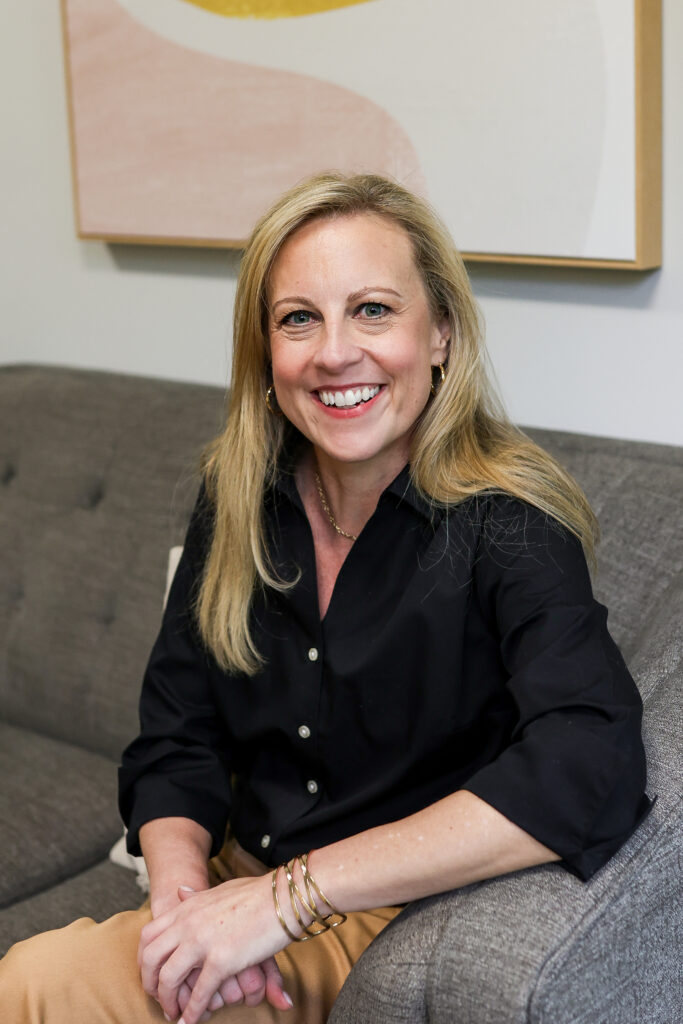
Shannon Carl*
MS, LPC-S, SEP
About Me
People often say they want to make changes in their life but find the change process to be more difficult and complicated than anticipated. The therapeutic relationship is a unique collaboration that helps you to learn about yourself though insight (cognitive/”a-ha!”) and awareness (somatic/experiential). When you begin to know yourself -and to accept yourself – change can happen.
Research indicates that the relationship between the client and the therapist is the most significant predictor of successful outcomes in therapy. Accordingly, I prioritize attending to the quality of our therapeutic relationship as I draw heavily from evidence-based treatments that are attachment-focused, emotion-focused, trauma-informed, and attentive to political and systemic dynamics. More specifically, I have training in Emotionally Focused Therapy for Individuals and Couples, Gottman Method for Couples, and Acceptance and Commitment Therapy, and Somatic Experiencing. These evidence-based modalities, when experienced within the container of our therapeutic relationship, strengthen and empower people facing challenges that arise from life transitions, loss, grief, abuse, trauma, as well as the cumulative toll of our modern existence.
Education, Training, and Relevant Experience
I hold a Master of Science in Clinical Mental Health Counseling from Tarleton State University, a member of the Texas A&M University System, as well as a Master of Science and a Bachelor of Science in Education from Baylor University, where my academic focus was community wellness and public health promotion. I am a Licensed Professional Counselor Supervisor (LPC-S) and a Somatic Experiencing Practitioner (SEP), integrating both clinical supervision and body-based trauma-informed approaches into my work.
In addition to my psychotherapy practice, I served as an adjunct faculty member in Baylor University’s Department of Public Health from 2001–2022. During this time, I taught courses exploring the human condition in all its complexity, including Stress Management, Health and Human Behavior, Human Diseases, Epidemiology, and Human Sexuality.
It’s been said that I was on the road to becoming a therapist before I knew it, and I can’t disagree. I am deeply satisfied to participate in my clients’ change process and consider it a privilege to support growth, healing, and resilience. I welcome any further questions you may have about me or my practice.
My professional resources and skills extend beyond the counseling room and the classroom. I enjoy engaging with the broader community and am happy to adapt academic or clinical presentations to meet the specific needs of your group.